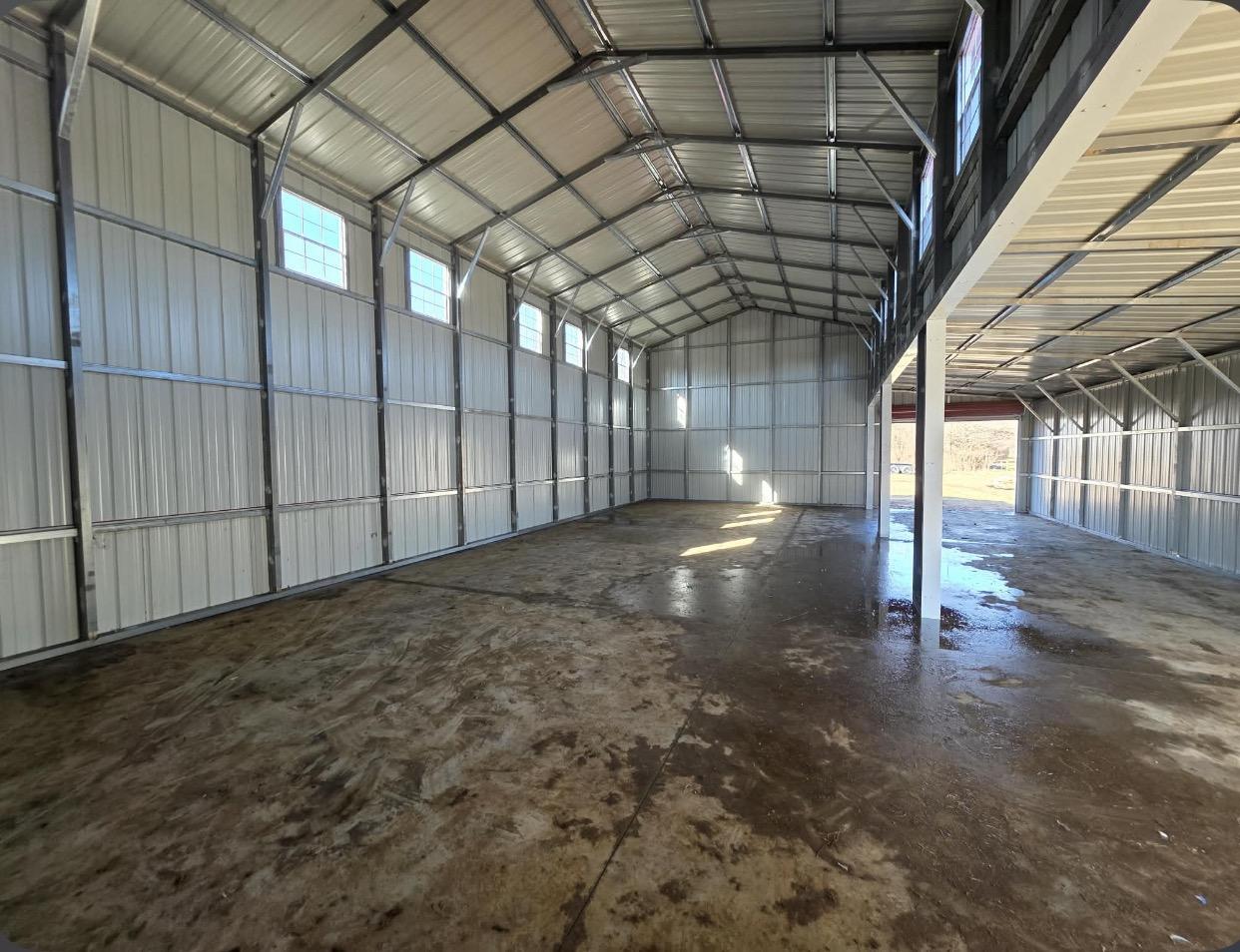
Steel is strong, but it isn’t a great insulator. On a hot day, an uninsulated metal building can feel like an oven. On a cold morning, the roof can drip water like it’s raining inside. Whether insulation is worth it depends on how you use the building and what you store in it.
Here’s a straightforward look at your options.
Condensation: the problem most people don’t expect
Condensation is the number one reason people insulate metal buildings, even ones they don’t heat or cool.
Here’s how it happens. Warm air holds moisture. When that warm, moist air touches a cold surface, like a steel roof panel on a cool night, the moisture turns to water droplets. That’s the same thing that happens on the outside of a cold glass of iced tea in the summer.
In a metal building, those droplets form on the underside of the roof and walls, then drip onto whatever is below. Over time, that can lead to:
- Rust on tools, equipment, and vehicles
- Mold and mildew on stored items
- Water spots and puddles on the floor
- Damage to hay, feed, or anything that needs to stay dry
Insulation helps by putting a barrier between the warm inside air and the cold steel. A vapor barrier under the slab also helps by keeping ground moisture from coming up into the building. Good airflow helps, too.
When insulation is worth it
Insulation usually makes sense if:
- You plan to heat or cool the building
- You’ll spend time working in it
- You store tools, vehicles, or anything that can rust
- You store hay, feed, or items that can mold
- It’s a barndominium or other living space
- You want to cut down on noise from rain on the roof
It may matter less for an open carport, or a barn that’s mostly open and well ventilated. Open carports can’t really be insulated in a useful way since air moves freely through them.
The main types of insulation
Blanket (fiberglass) insulation
Blanket insulation comes in rolls, usually with a facing on one side that acts as a vapor barrier. It’s often installed between the frame and the panels as the building goes up. It helps with both temperature and condensation and is one of the most common choices for metal buildings.
Things to know: The facing needs to be sealed well at seams to work as a vapor barrier. Installing it during construction is much easier than adding it later.
Spray foam
Spray foam is sprayed directly onto the inside of the panels, where it expands and sticks. It seals gaps and air leaks very well, and it bonds to the steel, which helps stop condensation right at the surface.
Things to know: Spray foam usually costs more and is applied by a specialty installer. It’s a popular choice for heated shops and living spaces.
Reflective insulation (radiant barrier)
Reflective insulation is usually a foil-faced material, sometimes with a bubble or foam core. It works by reflecting radiant heat, which is the heat you feel coming off a sunny roof. It can also act as a condensation barrier when installed properly.
Things to know: It is great at blocking radiant heat in summer but adds less resistance to heat loss in winter than thicker insulation. It’s often used in garages and storage buildings where the main goal is to control condensation and keep summer heat down.
Quick comparison
| Type | Best for | Things to consider |
|---|---|---|
| Blanket (fiberglass) | General use, temperature and condensation control | Easiest to install during construction |
| Spray foam | Heated shops, living space, air sealing | Usually costs more, specialty installer |
| Reflective | Summer heat and condensation in garages and storage | Less help with winter heat loss |
Plan it before the building goes up
The best time to decide on insulation is before the building is ordered. Some insulation is installed between the frame and panels during construction, and adding it later can be harder. If you plan to finish the inside with walls, think about where wiring and outlets go, too.
Also think about the roof. A vertical roof sheds water and snow best, and it’s what about 80% of our customers choose. Insulation and roof style work together to keep the building dry.
Ventilation matters too
Insulation works best with good airflow. Vents, windows, and ridge vents help moist air escape. If you’ll be running heaters, working with water, or parking wet vehicles inside, ventilation is especially important.
Get the right setup for your building
Every building and use is different. Tell us how you’ll use yours, and we’ll talk through which options make sense. See the buildings we offer on our metal buildings page, or look up terms in our glossary.
Call or text John at 276-235-1191, or start a quote with the quote builder. We’ll quote it with the options you need.
Common Questions
Why does my metal building drip water inside?
That is condensation. Warm, moist air hits cold steel and turns to water droplets. Insulation, a vapor barrier under the slab, and good ventilation all help.
Do I need insulation if I don’t heat my building?
Often yes. Insulation helps control condensation, which can rust tools and vehicles and cause mold, even in buildings that are not heated.
What is the best insulation for a metal building?
It depends on use. Blanket insulation is a common all-around choice, spray foam is popular for heated shops and living space, and reflective insulation helps with summer heat and condensation.
Can I add insulation after the building is up?
Sometimes, but some types are much easier to install during construction. It is best to decide before the building is ordered.
Ready to price your building?
Call or text 276-235-1191, or send us the size, location and what it is for. We will come back with a real number.
Leave a Reply